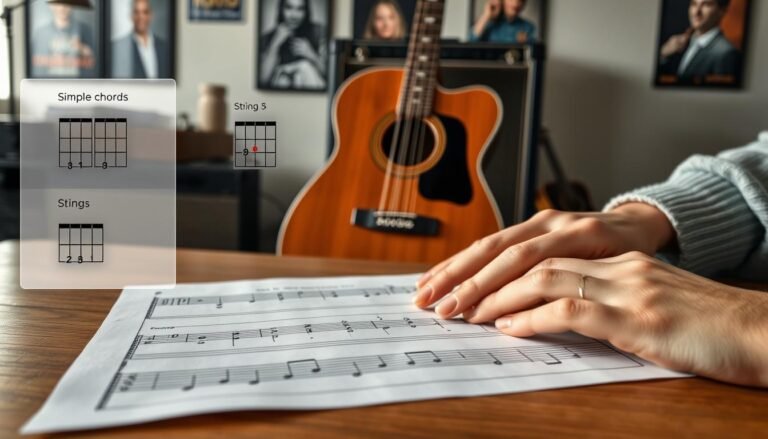
Bass Guitar Tuning Guide – How to Tune a Bass Guitar
Learning to tune a bass guitar is key for beginners. An untuned bass can’t blend with drums or fit in the mix. So, tuning is vital before every practice or show.
Tuning takes place at the headstock. To raise pitch, tighten a tuning peg. To lower it, loosen the peg. Basses tend to stay in tune longer than guitars, but tuning is necessary each time you play.
Today’s tools make tuning easy. You can use clip-on tuners, pedal or handheld electronic tuners, or apps on your smartphone. Many Fender and Ampeg practice amps come with built-in tuners for quick checks.
Ear training is also important. Start with a reliable reference note, like a piano or tuning fork. Then, tune one string to that pitch and use string relationships to tune the rest. This guide covers both electronic and ear-based methods for mastering bass guitar tuning.
Why Proper Bass Guitar Tuning Matters
Every song relies on the bass. When it’s in tune, the band sounds tighter. The rhythm and harmony become clearer. This section explains why tuning is key and how small habits can prevent errors.

The bass as the harmonic and rhythmic foundation
The bass plays the low notes and sets the rhythm and pitch. It’s expected to outline chord roots and match the kick drum. If it’s off, it clashes with other instruments, making songs sound muddy.
How tuning affects the mix and band tightness
Small changes in low frequencies are noticeable in mixes. The bass’s core range is 40–200 Hz. If it’s not right, the mix loses focus, and other instruments struggle to find their place. Regular tuning keeps everyone in sync.
Unique tuning challenges for low frequencies
Low notes are different. A low E note at 41.20 Hz interacts with room modes. Human hearing is less precise at low pitches, so harmonics are key. Thicker strings and longer scales make tuning harder. Learning specific techniques helps.
| Item Name | Description | Calories | Price |
|---|---|---|---|
| Reference Note | Use A=440 Hz or a bass-specific low E reference to set starting pitch. | 0 | $0.00 |
| Tuner Type | Bass-focused chromatic or strobe tuners yield faster, clearer readings for low notes. | 0 | $20–$150 |
| String Gauge | Heavier gauges support low tunings but increase tension demands on the neck. | 0 | $8–$30 |
| Room Check | Move around the room to hear standing waves and pick a tuning spot with fewer nulls. | 0 | $0.00 |
| Stretching | Stretch new strings gently to reduce slippage and speed up settling. | 0 | $0.00 |
| Intonation | Check 12th-fret accuracy after tuning to keep fretted notes in tune up the neck. | 0 | $0.00 |
| Practice Habit | Tune every session to build reliable ear training and reinforce chord shapes. | 0 | $0.00 |
| Backup Tuner | Keep a clip-on or pedal tuner on hand for quick checks on stage. | 0 | $15–$120 |
| Temperature Care | Store the bass in a case and avoid rapid temperature swings that shift pitch. | 0 | $0.00 |
| Collaboration | Agree on reference pitch with the band to prevent tuning mismatches. | 0 | $0.00 |
Follow these bass guitar tuning tips for clear low-end sound. Small habits, like checking tuning before each take, improve mixes and playing. Learning specific techniques for bass guitar reduces stage surprises and speeds up rehearsals.
Understanding Standard Bass Tunings and Frequencies
The most common bass setups follow a predictable pattern. This makes playing easier. Knowing the standard tunings and exact pitches for each string helps tune faster and improves playing with others.
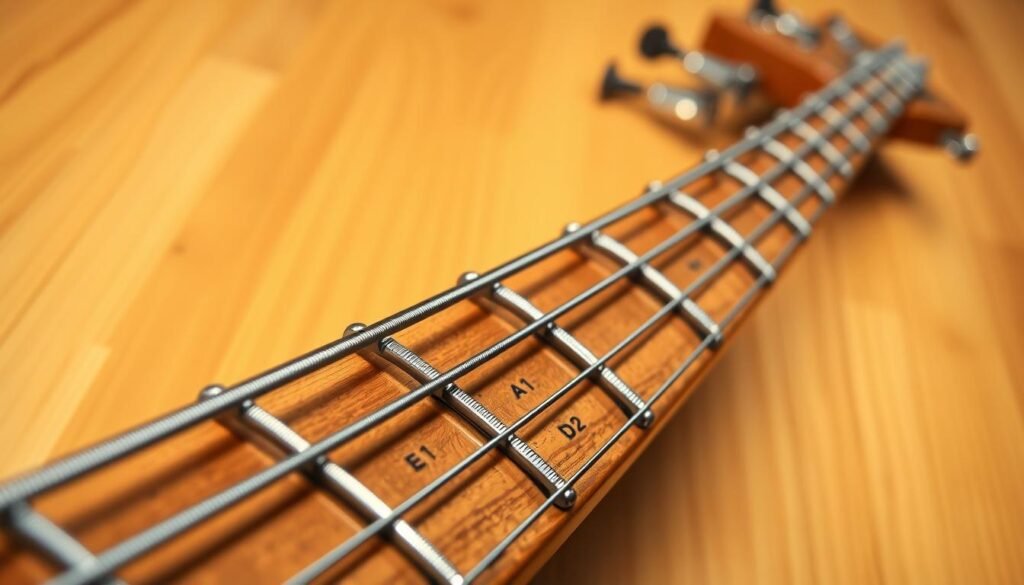
Standard 4-string tuning uses the notes E, A, D, G tuned in perfect fourths. These notes are the same as the lowest four guitar strings, but an octave lower. Learning these frequencies helps you tune accurately and play consistently.
| Item Name | Description | Calories | Price |
|---|---|---|---|
| Low E (4th string) | E tuned to 41.20 Hz, foundational low note for rock and pop | 0 | $0.00 |
| A (3rd string) | A tuned to 55.00 Hz, anchors many bass lines | 0 | $0.00 |
| D (2nd string) | D tuned to 73.42 Hz, bridges low and mid registers | 0 | $0.00 |
| G (1st string) | G tuned to 98.00 Hz, adds upper range for melodic work | 0 | $0.00 |
| Low B (5-string) | B tuned to 30.87 Hz, extends the low end for modern styles | 0 | $0.00 |
| High C (6-string) | C tuned to 130.81 Hz, offers higher melodic range | 0 | $0.00 |
| 5-string set | B E A D G standard for extended low range | 0 | $0.00 |
| 6-string set | B E A D G C standard for low B and high C range | 0 | $0.00 |
| Perfect fourth spacing | Consistent intervals that simplify fingering and patterns | 0 | $0.00 |
| Setup note | Wider necks and low-B tension need setup and technique tweaks | 0 | $0.00 |
5-string and 6-string tuning have different needs. The 5-string standard is B E A D G, adding a low B for deeper sounds. The 6-string standard is B E A D G C, keeping the low B and adding a high C for soloing.
When switching between sets, follow accurate bass guitar tuning steps. A 5-string needs heavier strings and a wider nut slot for the low B. A 6-string requires adjustments to keep string spacing and action right, without blocking low frequencies.
Perfect fourth intervals are why basses are tuned this way. They make playing easier with repeating patterns and predictable voice leading. These intervals also fit well with the harmonic series, helping bassists play chords and lines in many styles.
Mastering standard bass tunings and understanding E A D G frequencies makes playing easier. Use this knowledge with careful setup and deliberate tuning steps to keep your sound tight and pitch stable.
how to tune a bass guitar
Start in a quiet room with a well-maintained bass. Check the strings for rust or wear. Replace any worn-out strings. Let new strings settle by stretching them gently or playing chromatic runs.
Make sure the tuning pegs move smoothly. If they bind, lubricate the nut slots. Keep the bass at room temperature to avoid pitch changes.
Preparing your bass
Change dead strings before tuning. Use quality brands like D’Addario, Ernie Ball, or Rotosound. Tuning pegs should turn smoothly. If a peg slips, tighten the screw and test again.
Keep the bass in a gig bag or case between sessions. This helps maintain stable humidity.
Step-by-step ear tuning using a reference note
- Get a reliable reference pitch from a piano, tuning fork, or clip-on device.
- Tune a single string to that pitch. Start with low E on a 4-string, and low B on a 5-string.
- Use the 5th-fret method: fret the lower string at the 5th fret and match the open string above it.
- If tension is high, loosen the string well below the target pitch, then bring it up slowly.
- Use a tuner to confirm your ear work; treat this as a step-by-step bass guitar tuning guide to build reliable pitch recognition.
Verifying tuning across the neck with fretted notes and harmonics
Check harmonics to confirm purity. Play the 5th-fret harmonic of a lower string and compare it to the 7th-fret harmonic of the next higher string. They should match closely in tone.
Test intonation at the 12th fret by comparing the fretted note to the 12th-fret harmonic. A mismatch signals an intonation adjustment at the bridge.
Play common fingered positions along the neck and run simple bass lines. This ensures tuning holds in real musical contexts. Use this practice as part of easy bass guitar tuning methods and to verify consistent pitch across strings.
| Item Name | Description | Calories | Price |
|---|---|---|---|
| D’Addario XL Nickel | Balanced tension, bright tone, reliable for practice and gigging | 0 | $12.99 |
| Ernie Ball Slinky | Popular feel, smooth winding, steady tuning with moderate break-in | 0 | $14.50 |
| Rotosound Swing Bass | Punchy low end, durable wrap, favored in rock and punk | 0 | $16.00 |
| Planet Waves Chromatic Tuner | Clip-on accuracy, fast response for low E and B notes | 0 | $24.99 |
| Korg Pitchpipe | Portable reference for ear training and stage checks | 0 | $9.95 |
| Snark SN-8 | Chromatic clip-on with wide detection range for bass | 0 | $18.99 |
| Fender 5-String Set | Designed for extended-range basses with balanced low B | 0 | $19.99 |
| Dunlop Nut Sauce | Low-friction lubricant for nut slots; improves tuning stability | 0 | $6.50 |
| Zoom G1X Four | Practice multi-effects with built-in tuner and metronome | 0 | $79.99 |
| Gator Gig Bag | Padded protection, keeps humidity steady during transport | 0 | $39.99 |
Practice ear tuning daily. Treat this as an easy bass guitar tuning methods routine. Use the step-by-step bass guitar tuning guide above until matching pitches feels natural. Over time, you will trust your ear before checking with a tuner.
Tuning Methods: Electronic Tuners, Apps, and Clip-On Devices
Choosing the right tuner saves time and keeps the bass in tune under real-world conditions. This section compares common options, notes strengths for low strings, and gives practical tips you can use on stage and at home. Use this to match your setup to the tuning methods bass guitar players rely on most.
Types of tuners
| Item Name | Description | Calories | Price |
|---|---|---|---|
| Bass-Specific Tuner | Designed for low-frequency response and extended low B/E accuracy | 0 | $40–$120 |
| Chromatic Tuner | Detects any pitch, handy for alternate tunings and quick checks | 0 | $15–$80 |
| Strobe Tuner | Highest accuracy; studio and pro stage standard | 0 | $100–$400 |
| Pedal Tuner | Integrates into signal chain and mutes output while tuning | 0 | $70–$250 |
Clip-on tuner basics
Clip-on tuners read vibrations through the headstock using a piezo sensor. They ignore stage noise better than mics. Pick a unit rated for bass to ensure low E and low B register properly.
For reliable readings, clip firmly to the headstock where it senses clear vibrations. Mute your amp when possible. Pluck the string cleanly near the bridge to emphasize the fundamental. If a clip-on hesitates on low notes, try a model from Korg, D’Addario, or Snark that lists extended low-frequency support.
Smartphone apps and built-in tuners
Smartphone tuner apps are convenient and accurate in quiet rooms. They use the microphone, so they struggle in noisy rehearsal spaces and in rooms with strong bass room modes. Use apps from Peterson or Fender when practicing at home.
Many practice amps and audio interfaces include built-in tuners. Those tuners are useful for quick checks during rehearsal and for recording sessions. On stage, rely on a clip-on or pedal. For alternate tunings, pair a chromatic app or tuner with your bass-specific tuner to confirm odd notes.
Practical recommendations
- On stage use bass-specific tuners or clip-ons rated for low frequencies.
- For alternate tunings carry a chromatic option or a reliable app.
- Use a strobe tuner for recording or critical pitch work.
- Adopt best practices for tuning a bass guitar: tune before each set, mute when needed, and double-check low strings.
Combining devices gives confidence: a bass-specific tuner or clip-on for live stability and an app or chromatic tuner for flexible tuning methods bass guitar players use at home or in the studio.
Tuning by Ear: Fifth-Fret Method and Harmonics
Learning to tune by ear is key when you don’t have a tuner. It sharpens your musical hearing. This guide will show you a reliable ear-based method, why harmonics are great for low bass tones, and give you daily practice tips.
Begin by tuning one string to a reference pitch, like a concert A from a keyboard or a chromatic tuner. Use the fifth-fret method: press the 5th fret on the tuned string and pluck it. Then, match the open next string to that 5th-fret pitch.
Here’s how: press 5th fret on low E and match the open A. Press 5th fret on A and match open D. Press 5th fret on D and match open G. If unsure, start low and tune up to avoid string breakage.
Harmonic tuning explained.
Harmonic tuning uses bell-like overtones that are clearer than the fundamental. Lightly touch the string above the 5th fret and pluck for a 5th-fret harmonic. Do the same above the 7th fret on the next higher string for a 7th-fret harmonic.
Match the 5th-fret harmonic of the lower string to the 7th-fret harmonic of the higher string. This method makes beats easier to hear, great for low E and other deep strings.
When producing harmonics, touch very lightly directly over the fretwire, pluck with consistent strength, and release your finger after the tone rings for sustained clarity. Use the bridge pickup or reduce neck pickup to emphasize harmonics during tuning.
Short practice routine.
Practice tuning by ear every session, then check with an electronic tuner. Work in a quiet room and use steady plucks. Start with single intervals before tuning the full instrument. Record a short clip of your tuning and listen back to spot persistent pitch errors.
| Item Name | Description | Calories | Price |
|---|---|---|---|
| 5th-Fret Match | Fretted 5th on lower string matched to open higher string for standard fourths | 0 | $0.00 |
| 5th/7th Harmonic Pair | 5th-fret harmonic of lower string compared to 7th-fret harmonic of higher string | 0 | $0.00 |
| Reference Pitch | Use A440 or a reliable tuner as the starting point for ear training | 0 | $0.00 |
| Pickup Selection | Bridge pickup or reduced neck pickup helps harmonics stand out | 0 | $0.00 |
| Plucking Consistency | Use the same attack to avoid perceived pitch shifts during practice | 0 | $0.00 |
| String Safety Tip | Approach pitch from below when unsure to reduce string stress | 0 | $0.00 |
| Recording Practice | Record tuning sessions to track improvement and spot recurring issues | 0 | $0.00 |
| Quiet Environment | Low background noise makes beats and phase differences easier to hear | 0 | $0.00 |
| Verification | Confirm ear tuning with a chromatic or strobe tuner to calibrate your ear | 0 | $0.00 |
| Practice Interval Drills | Train on single intervals before full-string runs for focused ear development | 0 | $0.00 |
Combine these techniques with regular practice to build reliable ear skills. Use the methods above alongside bass guitar tuning tips to gain speed and accuracy when tuning by ear bass in live or studio settings.
Alternative and Genre-Specific Tunings for Bass Guitar
Exploring alternative bass tunings opens new sonic territory. Players can target heavier grooves, brighter solo work, or fuller low end without sacrificing playability. Small setup changes often make the difference between a usable tuning and one that causes rattles, intonation problems, or broken strings.
Below is a quick comparison to guide choices. Each option lists a common tuning, a short description, an estimated change in string tension, and a setup note you should check before committing.
| Item Name | Description | Calories | Price |
|---|---|---|---|
| Drop D Bass | Low E tuned down to D (D A D G). Makes power riffs easier and adds weight for rock and metal. | 0 | Requires minimal setup; light gauge strings usually fine. |
| Drop C Bass | All strings down a whole step then low string to C (C G C F). Favored in modern metal for deep, chunky tones. | 0 | Heavier gauges and intonation/truss checks recommended. |
| Lower Drop (B/A) | Extremely low tunings for djent and extreme metal; needs thick strings and possible neck adjustments. | 0 | Significant setup work; consider longer scale or baritone options. |
| Tenor Bass Tuning | A D G C tuning one fourth above standard. Suited for melodic playing, easier chord shapes, and some jazz lines. | 0 | Use lighter strings and check nut slots. |
| Piccolo Bass | Standard bass tuned up an octave with lighter strings for upper-register solos and melody work. | 0 | Requires clear amp settings for single-note clarity. |
| Nashville/Octave Variants | Mix of octave strings or partial octave tuning for country textures and studio layering. | 0 | Experimentation with string sets advised. |
| 5-String Low B | Adds low B for extended bottom end without detuning a 4-string. Common in metal, gospel, and pop. | 0 | Check when to use 5-string bass for song needs and band key ranges. |
| 6-String Extended | Low B plus high C expands harmonic and solo range for fusion and chordal work. | 0 | Wider neck; suitable for advanced players seeking range. |
| Studio Octave Layering | Use octave-tuned tracks or octave strings to thicken recorded bass without retuning an instrument. | 0 | Useful for producers and session players. |
Drop D offers immediate playability gains. Guitar-style power chords translate directly to bass. A drop D bass works well in alternative rock and metal when you need punch without heavy setup.
Drop C takes the idea further. Players tune every string down a step then the low string to C. A drop C bass delivers thick, modern metal tones. Expect to fit heavier string gauges and adjust the truss rod and intonation.
For extreme low tunings like Drop B or Drop A, thicker strings are essential. These tunings bring serious tension changes. Many players switch to longer scale instruments or consider bridge and nut work to handle the load.
Tenor and piccolo bass tuning serve melodic roles. Tenor tuning raises the instrument a fourth and simplifies chord voicings. Piccolo bass uses lighter strings an octave higher. Both are strong choices for jazz, funk, and soloists who want upper-register clarity.
Deciding when to use 5-string bass is often practical. If charts or band arrangements demand low B notes or frequent drop tuning, a 5-string saves retuning time and keeps tone consistent. Session players and touring bassists favor five-strings for flexible low-end coverage.
Setup matters across all choices. Adjust string gauge, widen nut slots when needed, and verify intonation after any change. Small tweaks to neck relief and bridge height prevent buzzing and ensure stable tuning.
- Choose a tuning that matches the song and the band’s sonic needs.
- Upgrade strings and check the neck if moving more than a whole step from standard pitch.
- Consider scale length when aiming for very low tunings; a baritone or long-scale bass may perform better.
Tuning Techniques for Different Bass Types and Setups
Different basses need different tuning methods. Players should know how to tune 4-, 5-, and 6-string basses. It’s also important to choose the right strings, scale length, and check intonation.
4-string vs 5-string tuning
For a 4-string, tuning to E–A–D–G is easy. Most players find the neck width, string spacing, and tension comfortable. But, a 5-string with a low B needs heavier strings and a wider nut slot to avoid buzzing.
String gauge, scale length, and tension impacts
Thicker strings increase tension and improve sound quality in low tunings. A thicker low B string keeps the sound clear without being too soft. Longer scales, like 35″, help with tuning stability for deep notes. Shorter scales might sound loose at low pitches and may need heavier strings.
Balanced tension across strings
Choose string gauges that feel even across the strings. This balance helps your technique and intonation. When changing gauges or tuning low, retune and let the neck settle before making final adjustments.
Intonation check bass guitar
Always compare the fretted 12th-fret note to the 12th-fret harmonic. They should be close. If the fretted note is sharp, move the saddle back. If it’s flat, move it forward. Check again after new strings, gauge swaps, or big pitch changes.
| Item Name | Description | Calories | Price |
|---|---|---|---|
| 4-String Setup | Standard E-A-D-G, light to medium gauge, simple nut and bridge setup | 0 | $0 |
| 5-String Low-B Setup | Low B requires heavier gauge, widened nut slot, possible bridge spacing tweak | 0 | $0 |
| 6-String Extended Range | Adds high C and low B; needs advanced muting and wider neck reach | 0 | $0 |
| Long-Scale Setup | 35″ or longer for better tension on low tunings, improved clarity | 0 | $0 |
| Short-Scale Setup | Better for vintage tone, needs heavier strings for deep tunings | 0 | $0 |
| Intonation Check | Compare 12th-fret harmonic to fretted note; adjust saddle position | 0 | $0 |
| String Gauge Swap | Change affects tension; retune, check truss rod and action | 0 | $0 |
| Nut and Slot Work | Widen slots for thicker low strings to prevent binding | 0 | $0 |
| Bridge Adjustment | Set saddle height and length for correct action and intonation | 0 | $0 |
| Truss Rod Tune | Relieve neck bow after tension changes to restore playability | 0 | $0 |
Use a tuner and your ears when making big setup changes. If unsure, get help from Fender or Warmoth-trained techs. Regular intonation checks and small adjustments keep your bass sounding great.
Best Practices for Tuning a Bass Guitar and Keeping It Stable
Keeping your bass guitar in tune is key to its sound. Follow simple steps before, during, and after playing. This helps keep the pitch stable and extends string life.
Tune every session. Always tune before playing and check during rehearsals or gigs. Small pitch changes can affect the bass’s sound in a mix. Use a good chromatic or bass-specific tuner and tune up to pitch for better stability.
| Item Name | Description | Calories | Price |
|---|---|---|---|
| Clip-On Tuner | Fast readings for low E and noisy stages | 0 | $25 |
| Chromatic Pedal | Hands-free tuning with mute function | 0 | $80 |
| Locking Tuners | Reduce slippage and speed up string changes | 0 | $45 |
| String Cleaner | Removes oils to prolong tone and life | 0 | $12 |
| Quality Bass Strings | Coated or uncoated options for tone and longevity | 0 | $20 |
| Humidifier Kit | Protects neck in dry climates | 0 | $18 |
| Gig Bag or Hard Case | Temperature and impact protection | 0 | $60 |
| Fretboard Oil | Preserves wood and prevents warping | 0 | $10 |
| String Winder | Speeds up safe string changes | 0 | $8 |
| Tuner App | Convenient tuning from your phone | 0 | Free–$5 |
String care bass guitar begins with clean hands and regular wiping. After playing, use a dry cloth on the strings. Use a string cleaner monthly for longer life. Replace strings when they lose tone or tuning becomes hard.
When putting on new strings, stretch them gently and retune several times. Play hard for a short time or pull each string up a bit at the midpoint. Repeat until the pitch stabilizes. This helps keep the bass in tune after string changes.
Keep the bass away from sudden temperature and humidity changes. Let it adjust to room conditions before fine tuning. Store it in a gig bag or hard case to reduce environmental stress. In extreme climates, use humidifiers or dehumidifiers to protect the neck and fretboard.
Fix slipping pegs with locking tuners or tighter string winding. Check tuning machines from brands like Gotoh or Hipshot for reliability. Use good setup habits: keep the nut slots clean and the bridge properly seated. Regular maintenance reduces surprises on stage and helps you keep bass in tune for longer.
- Tune before each session and during breaks.
- Wipe strings after playing and use string cleaner monthly.
- Stretch new strings and confirm stability before performance.
- Store in a case and allow acclimation after transport.
- Consider locking tuners if peg slippage is frequent.
Bass Guitar Tuning Tips and Troubleshooting
This guide offers quick bass guitar tuning tips and fixes. Follow simple rules to tune faster and more accurately. Learn when to seek a tech for setup help.
Tune up to pitch
Always start tuning from below by loosening first, then tightening. This method reduces slack and keeps the string in place. Use a steady pluck force when checking notes; uneven attack can give false tuner readings.
Slipping tuning peg fix
First, tighten the small screw on the back of the machine head if present. Wind the string neatly around the post, keeping winds close and downward. Locking tuners from brands like Gotoh or Grover can prevent slips on gigging instruments. If a peg slips after these steps, replace the tuner or have a tech install a higher-quality machine head.
Intonation troubleshooting bass
Check the 12th-fret octave after tuning. If the fretted note is sharp or flat versus the harmonic, adjust the saddle position at the bridge. Small changes can shift intonation dramatically on shorter-scale or heavy-gauge setups.
When to inspect setup components
Look at the nut slots if strings bind while tuning or when using a capo. Lubricate with graphite or a specialty nut compound to prevent binding. Check neck relief with a capo at the first fret and fretting at the last; excessive bow or backbow calls for slow truss rod adjustments or pro help.
| Item Name | Description | Calories | Price |
|---|---|---|---|
| Gotoh Locking Tuners | High-quality machine heads that lock strings for fast winding and stable tuning. | 0 | $60 |
| Graphite Nut Lubricant | Reduces string binding at the nut for smoother tuning and better stability. | 0 | $8 |
| String Winder | Speeds up winding and helps seat coils neatly on tuning posts. | 0 | $10 |
| Replacement Saddle Kit | Includes varied-height saddles for intonation adjustments and secure fit at the bridge. | 0 | $25 |
| Chromatic Clip-On Tuner | Detects low E accurately and gives quick visual feedback for stage or rehearsal use. | 0 | $20 |
| Truss Rod Wrench | Allows careful neck relief adjustments; use small turns and check often. | 0 | $7 |
| Premium Bass Strings (Set) | Stable gauges tuned for modern tension and reduced stretch after break-in. | 0 | $35 |
| Fretboard Conditioner | Protects wood and helps strings glide at the nut during tuning and bends. | 0 | $9 |
| Tech Setup Service | Professional inspection for persistent tuning instability and complex intonation issues. | 0 | $75 |
| Clip-On Humidity Gauge | Monitors case or room humidity to prevent neck warping and tuning drift. | 0 | $12 |
- Secure loose hardware before fine-tuning; rattles can change perceived pitch.
- When stretching new strings, tune up to pitch repeatedly until they settle.
- If electronics or pickup height change the perceived harmonics, tighten mounting screws and retest tuning.
Use these troubleshooting bass tuning actions to cut setup time and improve stability. Persistent issues like broad intonation errors, constant slipping, or severe buzzing mean a professional setup will save time and preserve tone.
Conclusion
Mastering bass guitar tuning is about a few key habits. First, get your instrument ready. Then, choose the right tuning tool, like an ear, clip-on, or strobe. Always double-check your tuning with harmonics and fretted checks.
Regular care is also important. Take care of your strings, pick the right gauge, and protect your bass from extreme temperatures and humidity. This keeps your tuning stable and reliable.
This tutorial suggests tuning every time you play. Practice using your ear and electronic tools together. Use the 5th-fret and harmonic techniques to improve your ear.
Match the string gauge and scale length for lower or extended-range tunings. This will help your bass sound great in mixes and feel consistent in performance.
For the best tuning advice, use a bass-specific tuner for accurate low frequencies. If you have issues with intonation or mechanics, see a professional technician. Following these steps will make mastering bass guitar tuning easy and routine.